The problem
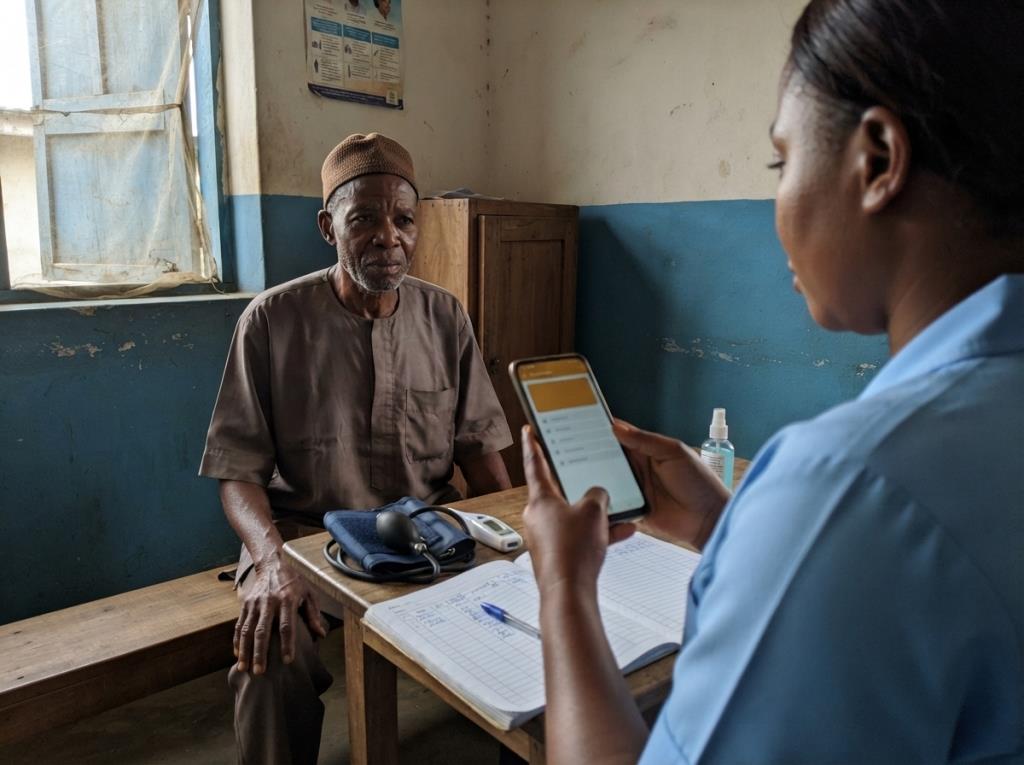
Community health workers are often the first and only point of care in rural areas. They must decide quickly whether a patient can be cared for at home or needs a clinic, often with no internet connection and with guidance written in a language that is not their own.
What Asibi does
Asibi guides a health worker through a short set of clinical questions and returns a risk level with clear care and referral advice. It runs fully offline and saves each case on the device, then syncs when a connection returns.
Its decision support is tuned for climate-related illnesses such as malaria, dengue, heat stroke and waterborne disease, which are rising as weather patterns change.
How it works
- Choose the symptoms
Select the main symptom cluster from the triage screen.
- Answer guided questions
Follow short clinical questions that narrow down the likely condition.
- Get guidance
Receive a risk level with care advice and a referral recommendation.
- Save and sync
The case is stored on the device and synced when the network returns.
Field pilot
Asibi is being field tested by 11 community health workers in Nigeria. The pilot is gathering structured feedback on accuracy and ease of use in real conditions. Results will be published when the pilot closes.
Asibi supports the judgement of trained health workers. It does not replace it.